
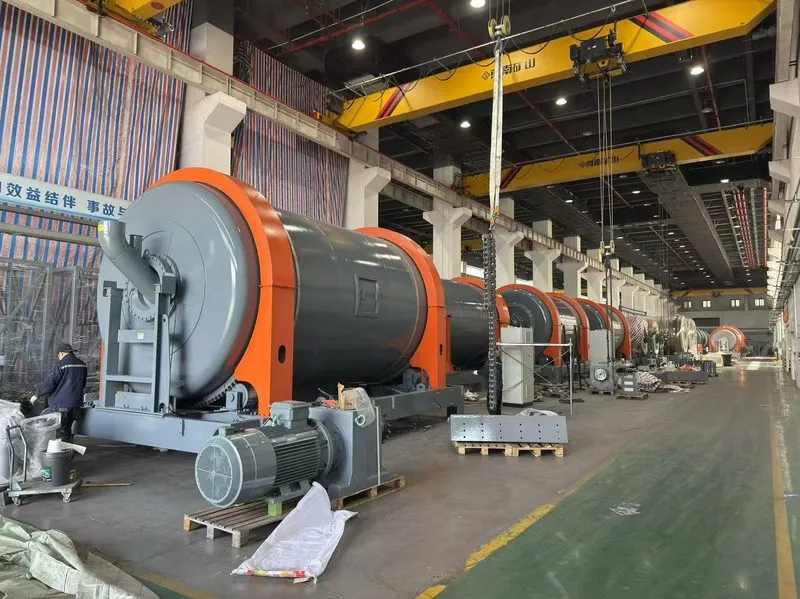
The Real Challenge at the Finished-Product Stage
At the finished-product stage of LFP production, the goal is not just mixing. The real goal is to take multiple upstream batches and unify them into fewer, more consistent final batches before delivery. That is where blender volume starts to matter.
If the blender is too small, producers have to blend again and again. And even after all that work, the final product may still come out in too many separate batches.
That creates three direct consequences:
- ✕ Batch-to-batch consistency becomes harder to control
- ✕ The process flow becomes longer and more complicated
- ✕ Sampling, testing, and release costs rise significantly
The Hidden Risk of Large Ribbon Mixers
And even if a large-volume Ribbon Mixer is used to address the size problem, another risk is introduced: residue.
Because of the Ribbon Mixer’s mechanical design itself, some material will remain inside the vessel after discharge. That means part of the previous batch may carry over into the next one — adding another source of inconsistency at exactly the stage where consistency matters most.
The Drum Blender FBM: A Different Logic
That is where the DRUM BLENDER FBM changes the logic entirely.
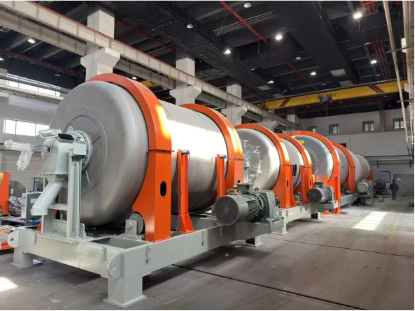
With up to 50 m³ capacity, the FBM allows producers to blend much larger volumes at once, so more upstream batches can be unified into fewer final finished-product batches.
At the same time, its shaftless design and clean discharge principle help reduce carryover, with residue as low as 0.001%. And because the FBM uses a gentle drum-type mixing principle, it helps preserve the physical properties of the finished product — especially important at the final stage of LFP production.
- ✅ Fewer final finished-product batches
- ✅ Better batch-to-batch consistency
- ✅ Simpler process flow
- ✅ Lower testing and release costs
- ✅ Lower residue carryover
- ✅ Gentle mixing without damaging product properties
Rethinking What “Large-Capacity” Really Means
In finished-product blending, a large-capacity blender is not just about throughput.
It is about turning many batches into fewer, more consistent final batches.
Interested in Optimizing Your LFP Blending Process?
Let’s connect to discuss how our Drum Blender FBM can help improve your blending process.
Contact Us