
Specifications
| Model | Scale | Chamber Volume | Power | Speed |
|---|---|---|---|---|
| VCJ-15 | Lab | 6–10 L | 2.2 kW | 20–107 rpm |
| VCJ-50 | Lab/Pilot | 38–46 L | 7.5 kW | 20–80 rpm |
| VCJ-200 | Pilot | 150–200 L | 15 kW | 20–61 rpm |
| VCJ-500 | Production | 250–500 L | 18.5 kW | 20–51 rpm |
| VCJ-1500 | Production | 1200–1500 L | 37 kW | 10–29 rpm |
| VCJ-4000 | Production | 1500–2000 L | 37 kW | 10–29 rpm |
Weight and overall equipment dimensions are confirmed per order based on final vessel configuration.
Operating Principle
==
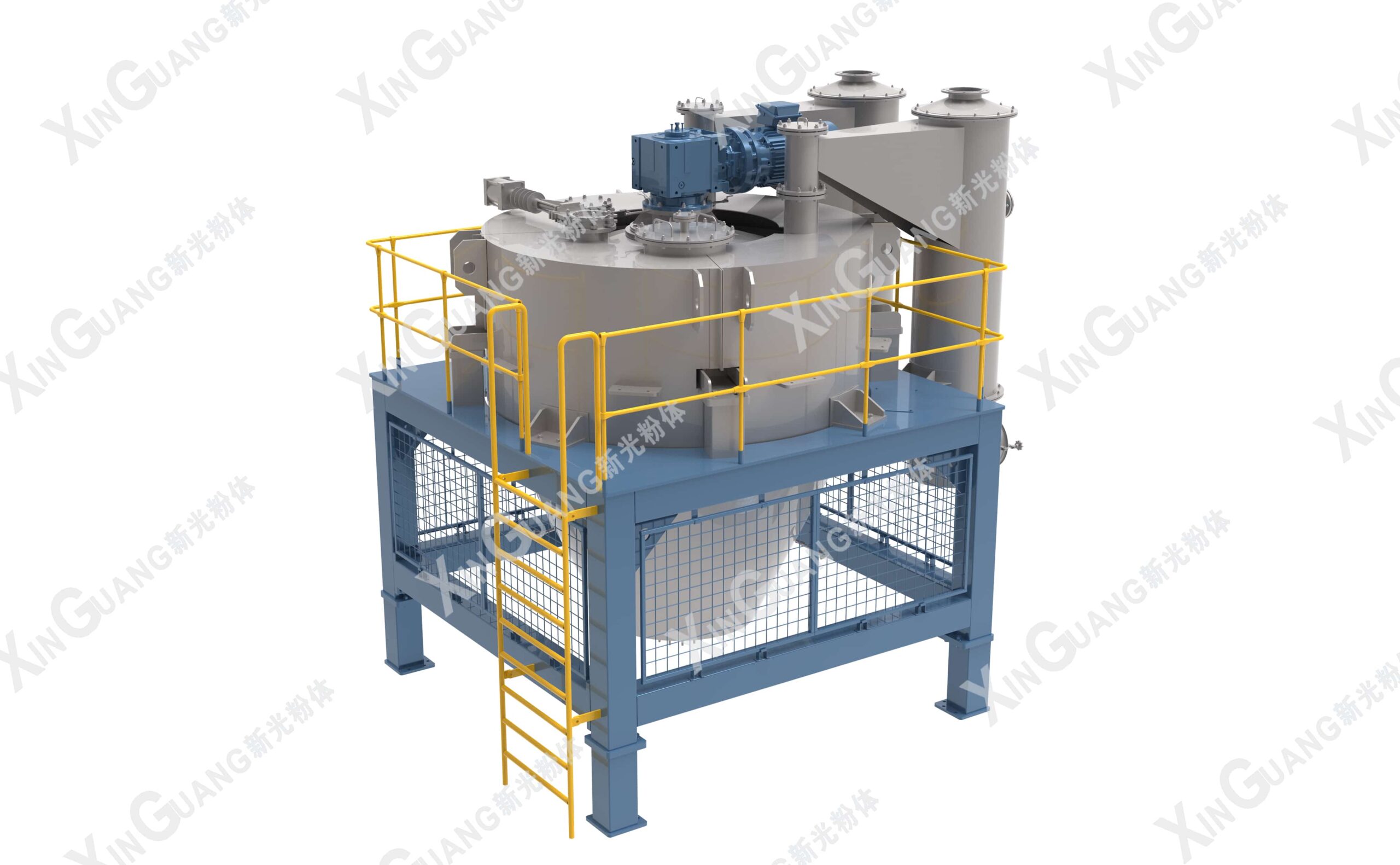
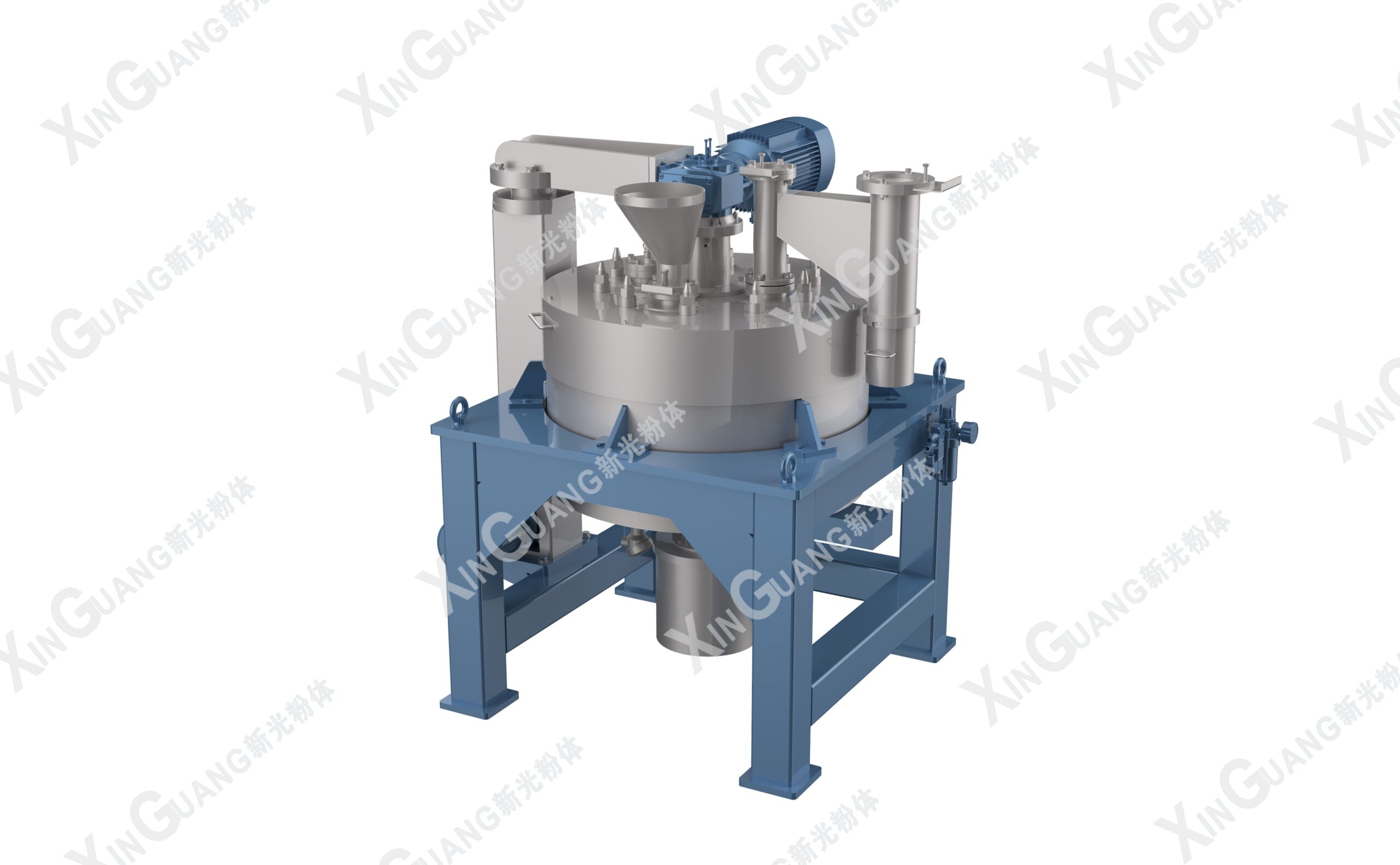
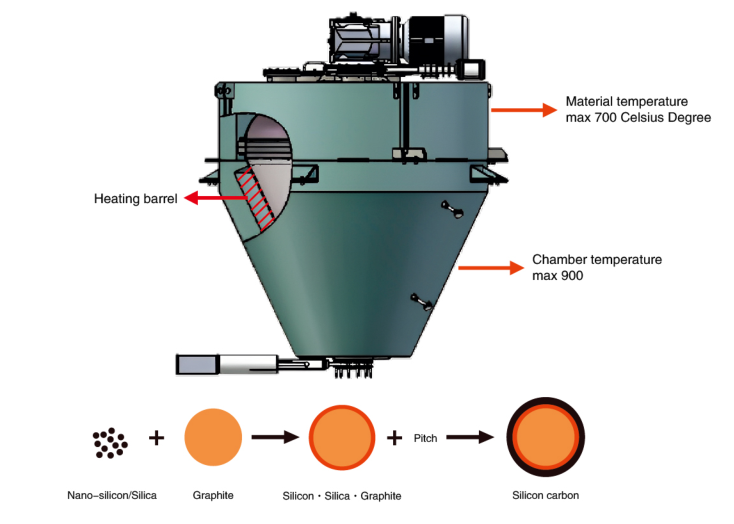
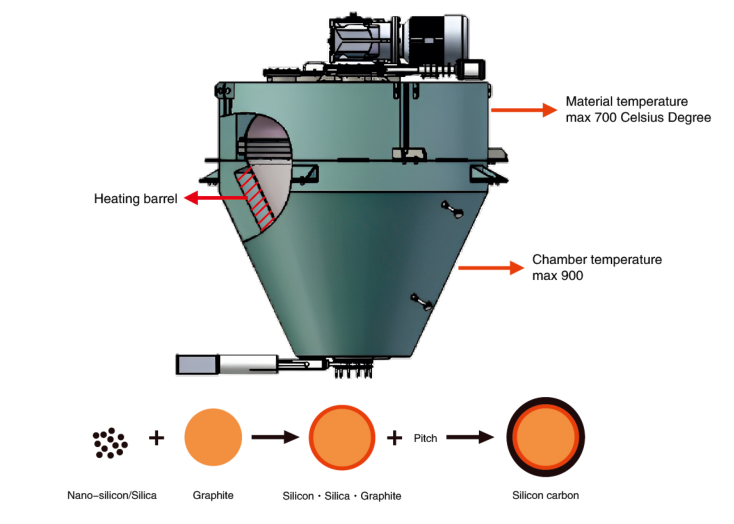
A conical vessel houses a central shaft fitted with wall-hugging blades set at an inclined angle. High-speed rotation generates strong centrifugal force, driving powder up the conical wall to the dished head before it falls back to the vessel base, cycling continuously through the tumbling zone.
Heating plates on the vessel exterior conduct heat directly through the wall into the material, coating pitch onto particle surfaces as they tumble. Material temperature reaches up to 700°C, with chamber temperature up to 900°C.
A dual-safety temperature monitoring system independently controls heating-plate and material temperature. Integrated oil, air, and water cooling protects the motor and reducer from internal heat migration.
Key Features
- Magnetic shaft seal rated to 700°C material temperature — removes the 350°C ceiling and liquid-cooling requirement of conventional mechanical seals
- Millimeter-level, fully machined blade-to-wall clearance leaves virtually no dead zones, versus welded and unmachined competitor vessels
- Continuous dynamic tumbling replaces static-kiln pitch coating, reducing nano-silicon oxidation risk during processing
- Gantry-machined components hold 0.005–0.01 mm precision; dynamic balance testing reduces vibration and extends bearing life
- Six models from 6 L lab-scale to 2000 L production-scale on one equipment platform
Experiment Results
Coated Sample
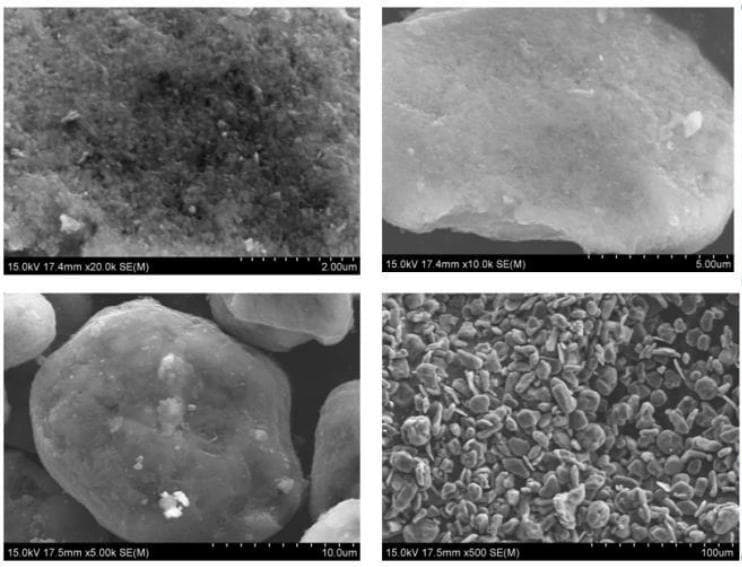
SEM analysis of the sample surface after pitch coating shows a smooth, uniform surface, clearly different from the large population of small surface particles visible before coating. The coating result met the target outcome.
==
Spray-Compounded Sample
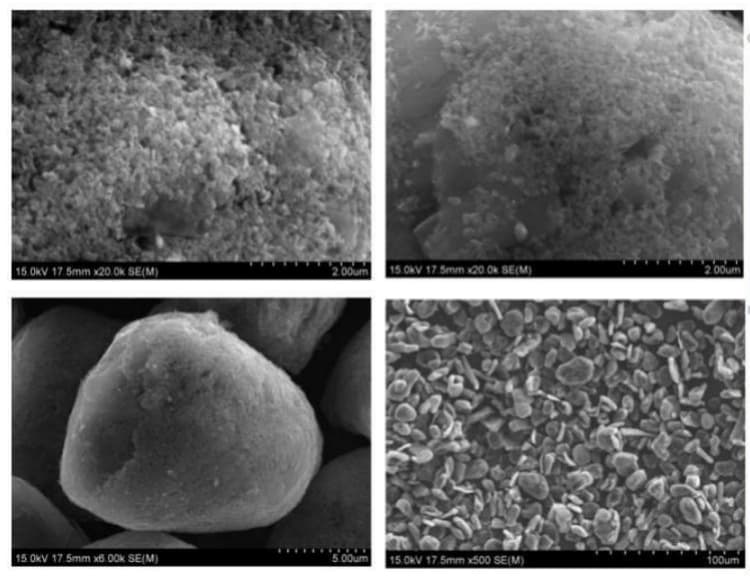
High-magnification SEM imaging of the spray-compounded sample surface shows a large number of silicon particles distributed on the surface, with a relatively ideal coating effect. Low-magnification imaging shows no significant population of independent, regularly shaped spherical particles, confirming the silicon did not form separate particles on its own. The result met the target outcome.
==
Applications
- Lithium battery anode materials — silicon-carbon and silicon suboxide (SiOx) composite anode pitch coating for oxidation protection and conductivity improvement
- Natural and artificial graphite — pitch-based surface coating to improve cycling stability
- New energy material R&D — process development and pilot validation for battery material research institutes and universities
- Scale-up manufacturing — lab trial (VCJ-15) through mass production (VCJ-1500/4000) on a single equipment platform
Enquiry
Tell us your material, target particle size, and throughput. We will advise on
model selection and run a trial on your own powder before you commit to equipment.
Yibin Andy Wei — Application Engineer
Email: [email protected]
LinkedIn: Yibin Andy Wei
WhatsApp: +1 380 900 2442