
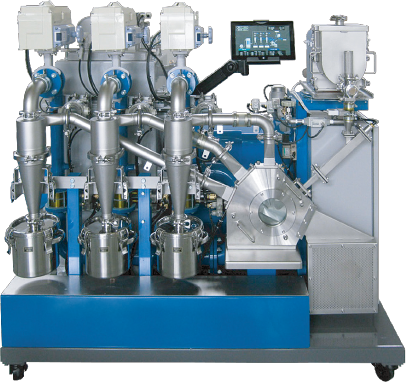
Challenge:
Alumina: D50: 7.05um, true specific gravity: 1.58g/cm3, moisture content: 0.27%, angle of repose: 135 degrees.
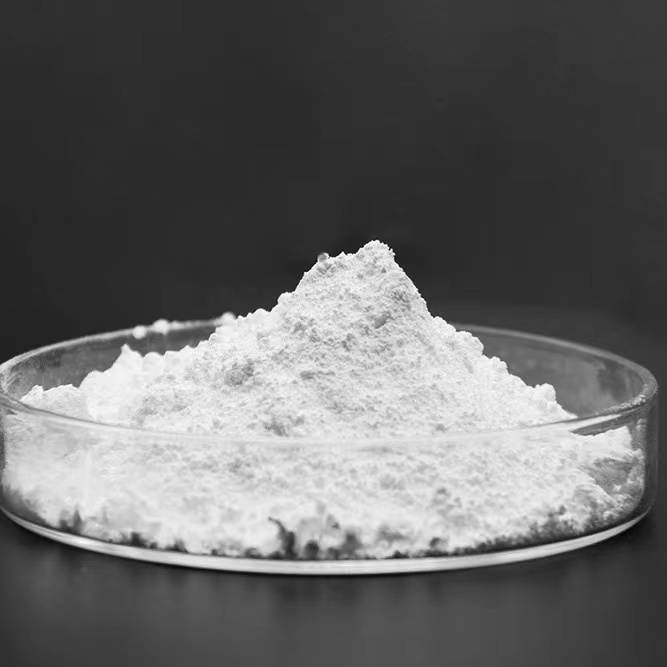
Particle size distribution of raw materials:
D10:1.49137μm
D50:7.04914μm
D97:19.0631μm
D100:34.2550μm
The particle size distribution after particle classification should meet the following requirements:
D6:≥4.2μm
D50:7~7.5μm
D97:≤11.8μm
D100:≤18.0μm
Solution:
The high-precision Coanda jet classifier is an airflow classifier that utilizes the Coanda effect (fluid tends to flow against the surface) to effectively obtain three different particle sizes of products at once.
By utilizing this effect, the airflow flows along the curved surface, attracting and accelerating particles, and using the difference in inertial force to classify the particles. Fine powder with low inertial force flows together with the airflow near the curved surface. Coarse powder with high inertia force flies out in the opposite direction of the surface. The medium powder with high inertia force flies out in the middle direction.
Coanda jet grading machine can accurately grade the micro powder range that cannot be reached by the screening machine. The uniformity of particles contributes to the development and production of high-quality and high-performance products.
The highly dispersed nozzle in the feeding section achieves efficient grading performance. This device is even suitable for grading high viscosity materials or abrasives.
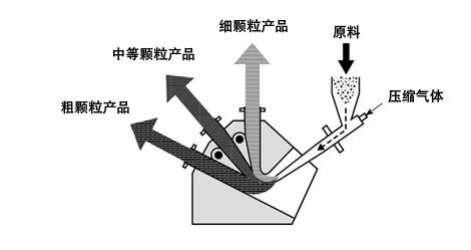
Equipment process:
For the first classification, the raw material fine powder is taken with a yield of 20%. For the second classification, the coarse powder in the fine powder is taken with a yield of 50%, resulting in an overall yield of 10%.
achievement:
The first classification of fine powder D97: 7.9~8.3um meets the requirement of D97: ≤ 11.8 μ m. Due to customer concerns about yield issues, the target requirement was subsequently lowered after achieving the required grading, with a focus on the D97 particle size distribution.